
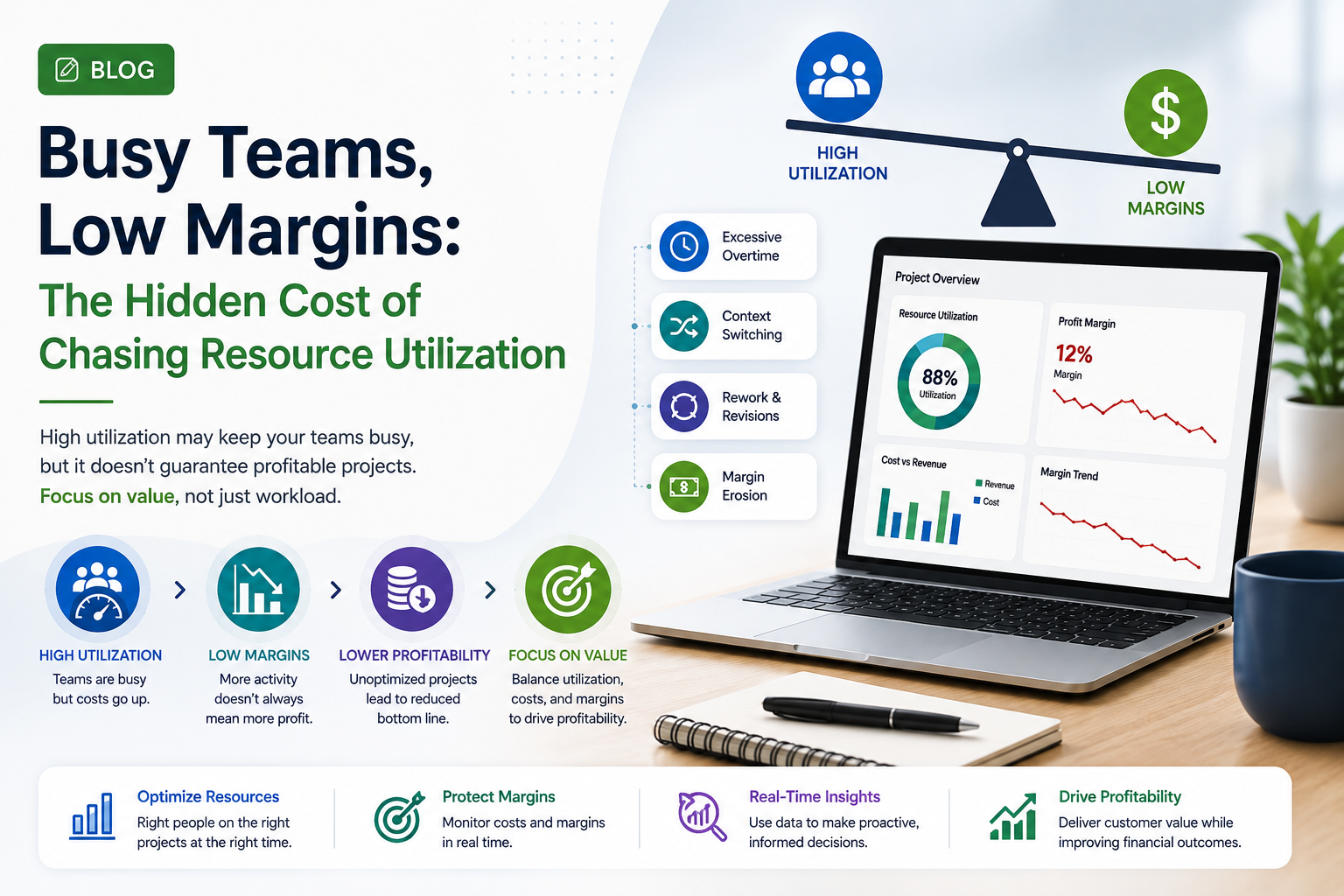
Organizations often strive to keep every employee fully occupied, believing that higher utilization automatically leads to higher profits. While this may seem like an effective strategy, it can create an unexpected problem busy teams don’t always deliver profitable projects.
Many project-based organizations achieve utilization rates of over 85%, yet continue to face declining margins, delayed deliveries, and increasing project costs. The reason is simple: keeping people busy is not the same as creating business value.
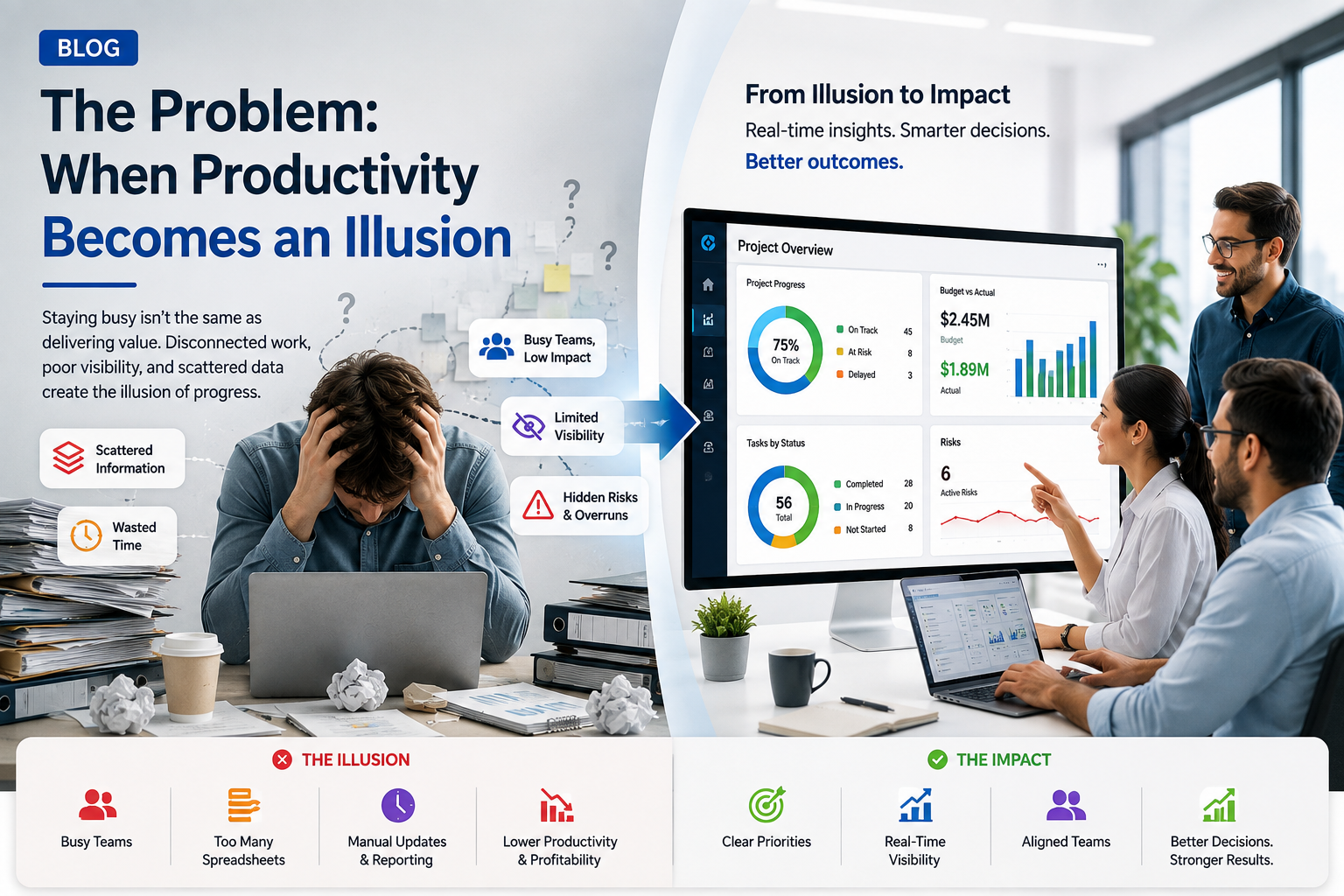
The Problem: When Productivity Becomes an Illusion.
Imagine a delivery team working at full capacity.
Projects are moving, timesheets are filled, and resources appear fully allocated. Everything looks efficient until financial reports reveal that project margins are lower than expected.
This usually happens because organizations focus on resource utilization instead of delivery efficiency.
Common reasons include:
- Skilled resources working on low-value tasks
- Frequent context switching across multiple projects
- Excessive rework caused by poor planning
- Scope changes that increase effort without increasing revenue
- Limited visibility into project costs until it’s too late
When leaders only monitor utilization, these issues often remain hidden.
The Solution: Focus on Value, Not Just Workload.
High-performing organizations balance utilization with financial and operational insights.
Instead of asking, “Is everyone busy?”, they ask:
- Are projects delivering expected margins?
- Are resources assigned based on skills rather than availability?
- Is project effort aligned with budgets?
- Which projects require corrective action before profitability declines?
Having real-time visibility into project delivery, financial performance, and resource allocation allows managers to make proactive decisions instead of reacting after margins have already been impacted.
Solutions like Whizible help connect project management, resource planning, timesheets, and financial data, giving leadership a complete picture of project health rather than isolated utilization reports.
For more insights, visit the Whizible Blog:
https://www.whizible.com/blog/
You may also find these resources useful:
- https://www.whizible.com/resource-management-software/
- https://www.whizible.com/financial-project-forecasting-connected-data/
For leadership insights on project governance and business transformation, follow Dr. Vishwas Mahajan:
https://www.linkedin.com/in/vishmahajan/
Conclusion
High utilization is a useful operational metric, but it should never be the ultimate goal.
Organizations that prioritize project profitability, efficient resource allocation, and financial visibility consistently make better business decisions than those focused solely on keeping teams occupied.
Success isn’t measured by how busy your people are, it’s measured by the value they create.
Frequently Asked Questions
-
Why can highly utilized teams still have low project margins?
Because factors like rework, poor planning, inefficient resource allocation, and cost overruns increase delivery costs without increasing revenue.
-
Should organizations stop tracking utilization?
No. Utilization is important, but it should be measured alongside profitability, project costs, forecasting, and delivery performance.
-
What metrics should leaders monitor besides utilization?
Project margins, budget variance, forecast accuracy, realization rate, resource capacity, and revenue leakage provide a more complete view of business performance.
Are your teams busy but your margins still under pressure? Discover how Whizible helps organizations connect project execution, resource management, and financial visibility to improve profitability.
Explore more at www.whizible.com.
Next Blog in the Series: From Utilization Metrics to Profitability Intelligence: Why Modern Project Organizations Need More Than Timesheets.