
Resource planning begins with people.
Capacity intelligence connects those people to delivery and business outcomes.
This is the final shift modern delivery organizations need to make.
Knowing that a resource is available is operational information.
Knowing whether allocating that resource to Project A instead of Project B improves utilization, protects a strategic deadline, reduces hiring needs or improves margin is intelligence.
The Problem: Resource Decisions and Business Decisions Are Often Disconnected.
Delivery teams may optimize staffing for project requirements.
Finance may optimize for cost.
HR may focus on skills and workforce availability.
Sales may prioritize opportunities.
Each function can make a logical decision independently while the organization still produces a poor overall outcome.
For example, assigning a senior resource to a project may solve an immediate staffing problem but negatively affect project economics. Hiring externally may close a skill gap while similar capability is due to roll off another project shortly.
The problem is not simply resource availability.
It is decision context.
The Solution: Connect Capacity With Delivery and Financial Intelligence.
Capacity intelligence becomes more valuable when resource information is connected with:
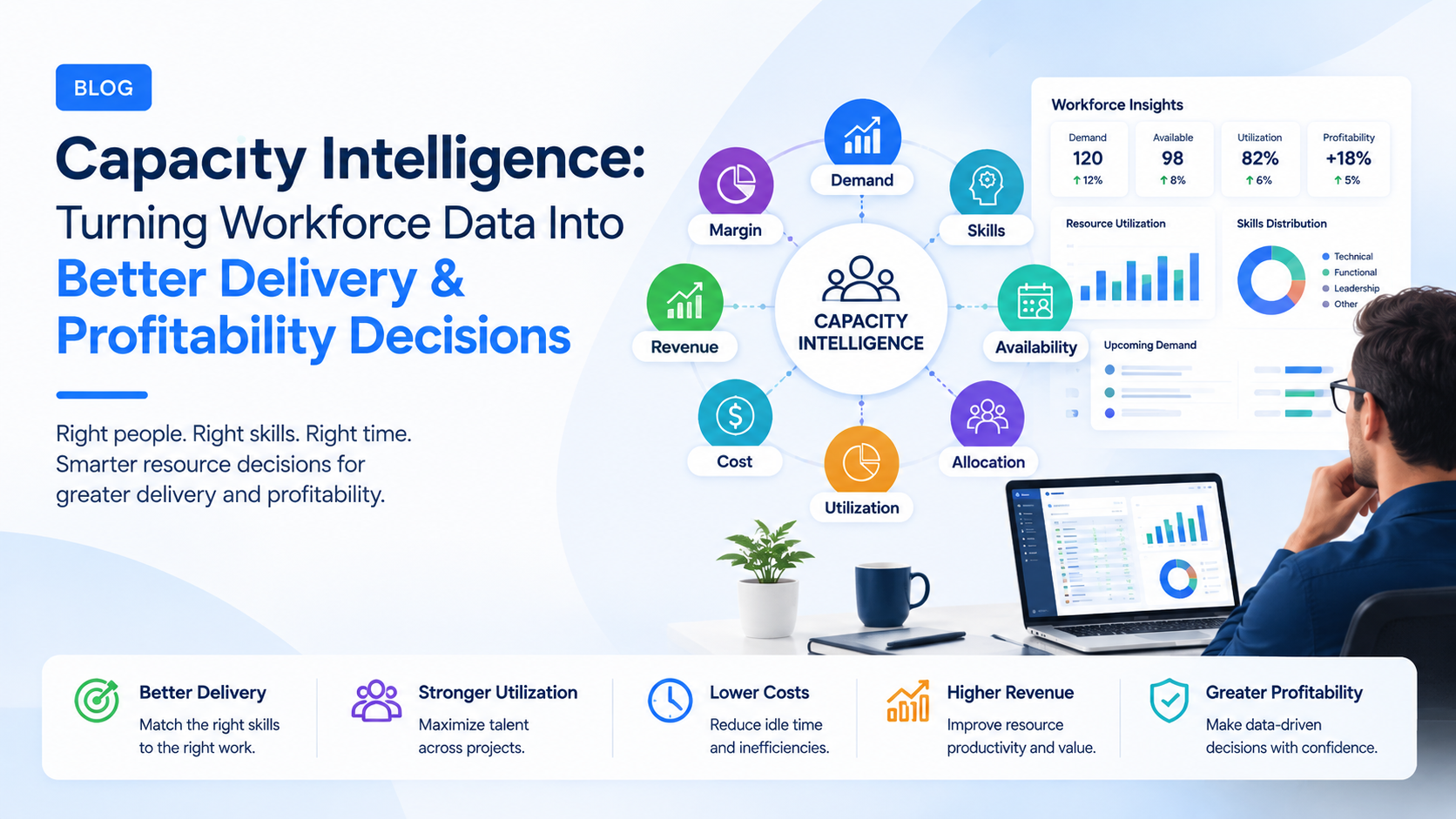
Demand → Skills → Availability → Allocation → Utilization → Cost → Revenue → Margin
This gives leaders a broader view of every staffing decision.
Whizible’s content on revenue leadership similarly connects resource availability, skills, utilization, delivery KPIs and financial outcomes rather than treating resource management as an isolated process.
Imagine a delivery leader reviewing upcoming demand and immediately seeing which skills are constrained, which resources will roll off, where bench capacity exists, which projects are most important, and what the financial implications of different staffing decisions could be.
That is fundamentally different from maintaining an allocation spreadsheet.
From Reports to Decisions
The ultimate objective of capacity intelligence isn’t another dashboard.
It’s faster, better-informed decisions.
Instead of discovering problems after utilization drops or projects get delayed, organizations can identify potential mismatches earlier and respond while multiple options remain available.
Integrated platforms such as Whizible are designed to connect project management, resource optimization, reporting and financial controls within a broader delivery environment.
For ongoing perspectives around delivery governance and project-driven organizations, connect with Dr. Vishwas Mahajan on LinkedIn.
The Future Is Capacity Intelligence
The evolution is clear:
Resource Allocation → Resource Planning → Capacity Forecasting → Capacity Intelligence
Organizations that make this transition gain more than better utilization.
They gain the ability to understand workforce constraints earlier, respond to demand faster, protect delivery commitments and make resource decisions with greater financial context.
Modern delivery leadership isn’t about keeping everyone busy.
It’s about knowing whether your organization has the right capacity to deliver what’s coming next.
FAQs
-
What is capacity intelligence?
Capacity intelligence combines workforce supply, skills, utilization, future demand and relevant business data to improve resource and delivery decisions.
-
How is it different from capacity planning?
Capacity planning estimates whether sufficient resources are available. Capacity intelligence adds broader context to help leaders understand the implications of different decisions.
-
Can capacity intelligence improve profitability?
It can support better profitability decisions by helping organizations reduce unnecessary bench, avoid inappropriate staffing, improve utilization and connect resource choices with project economics.
-
What data is needed?
Useful inputs include resource availability, skills, allocations, project demand, pipeline requirements, timesheets, resource costs, planned roll-offs and project financial information.
-
Where should an organization start?
Start by creating reliable visibility across resources, skills, current allocations and upcoming demand. Forecasting and more advanced decision intelligence can then be built on that foundation.
Complete the Journey
If your organization is still managing capacity primarily through spreadsheets and disconnected reports, the opportunity isn’t simply to digitize resource planning.
It’s to transform it into a forward-looking decision capability.