
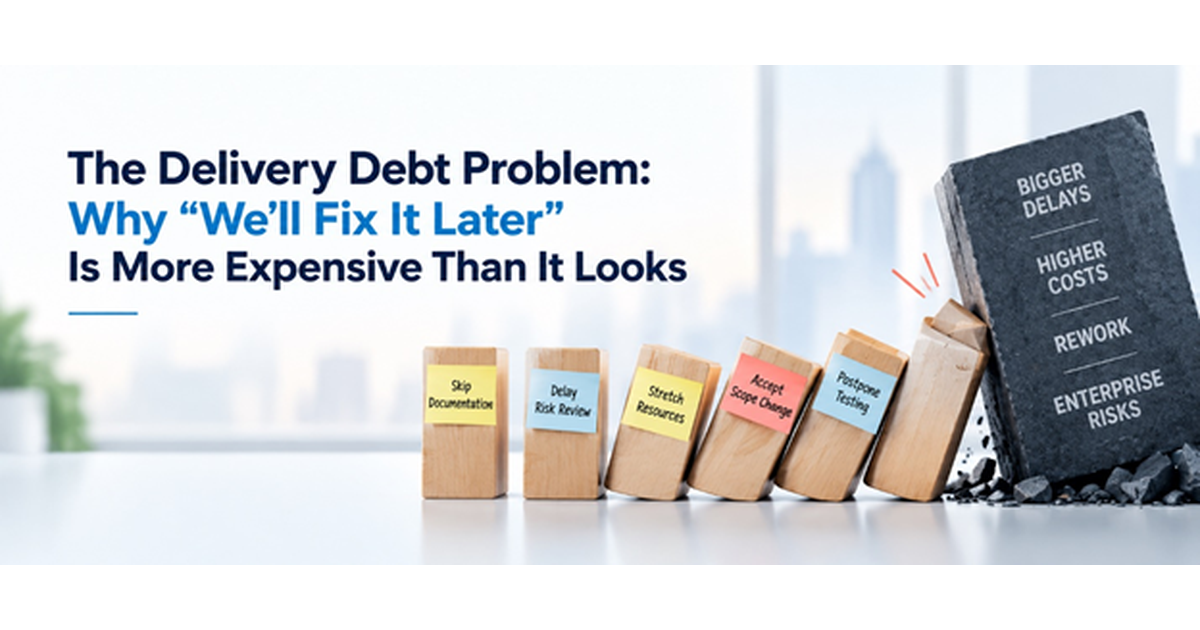
Every project makes compromises.
A deadline is tight, so documentation is postponed. A key resource is unavailable, so someone else is stretched across two projects. A small scope change is accepted without formally assessing its impact. A risk is discussed in a meeting but never recorded because the team believes it can be handled later.
Individually, none of these decisions looks dangerous.
The problem begins when “later” becomes the normal operating model.
That is delivery debt: the accumulated operational burden created when short-term project compromises are not properly resolved.
Just as technical debt makes future software changes more difficult, delivery debt makes future execution more difficult, expensive and unpredictable.
The Problem: Small Compromises Rarely Stay Small.
Consider a project where an experienced resource is temporarily shared with another critical engagement. The project continues, but reviews take longer. A milestone slips slightly. To recover, the team works faster and postpones a few lower-priority activities.
The dashboard may still show the project as green.
But underneath that status, debt is accumulating.
Eventually, organizations begin seeing familiar symptoms: repeated escalations, resource conflicts, excessive rework, missed dependencies, unplanned effort and shrinking project margins.
The problem is therefore not always one major delivery failure. It is often dozens of small unresolved compromises interacting with one another.
Whizible’s own material emphasizes integrated project execution, real-time visibility and proactive performance management rather than relying only on retrospective project information. Whizible
The Solution: Make Compromises Visible.
Organizations cannot eliminate every compromise. Delivery environments are too dynamic for that.
What they can eliminate is invisible compromise.
Project leaders need a connected view of project progress, effort, resources, risks, issues, scope changes and financial impact. When these signals are viewed together, management can see whether a temporary workaround is actually becoming a structural delivery problem.
A practical starting point is to:
- Record changes and risks when they occur.
- Track planned versus actual effort continuously.
- Connect resource allocation with project commitments.
- Review exceptions rather than waiting for major escalations.
- Give leadership visibility across projects, not only individual project reports.
This moves governance from “What went wrong?” to “What is beginning to go wrong?”
For a related perspective, explore Whizible’s guidance on managing fixed-price projects and profitability risks.
You can also follow Dr. Vishwas Mahajan’s leadership perspectives on project execution, governance and enterprise visibility.
The Bigger Question
Delivery debt does not become dangerous simply because it exists. It becomes dangerous when organizations continue adding new commitments on top of unresolved execution problems.
That brings us to the next question:
How does delivery debt accumulate across multiple projects without leadership noticing?
That is where Part 2 begins.
FAQs
What is delivery debt?
Delivery debt is the accumulated impact of unresolved project compromises, such as deferred activities, unmanaged changes, resource conflicts, undocumented decisions and delayed risk mitigation.
Is delivery debt the same as technical debt?
No. Technical debt primarily concerns software or architecture decisions. Delivery debt is broader and can involve resources, scope, governance, schedules, dependencies, processes and financial performance.
Can delivery debt be completely avoided?
Not necessarily. Some compromises are legitimate business decisions. The objective is to make them visible, understand their consequences and ensure they are eventually resolved.