
For many IT services organizations, profitability is often evaluated only after margins have already been impacted. Projects exceed budgets, utilization rates decline unexpectedly, vendor costs rise, or change requests remain unbilled. By the time finance teams uncover these issues, revenue leakage has already occurred.
The core challenge is simple: forecasting alone is no longer enough.
Traditional forecasting models provide a static view of expected financial performance, but they rarely capture the dynamic realities of project execution. In today’s services environment, organizations need more than projections — they need continuous, real-time financial control.
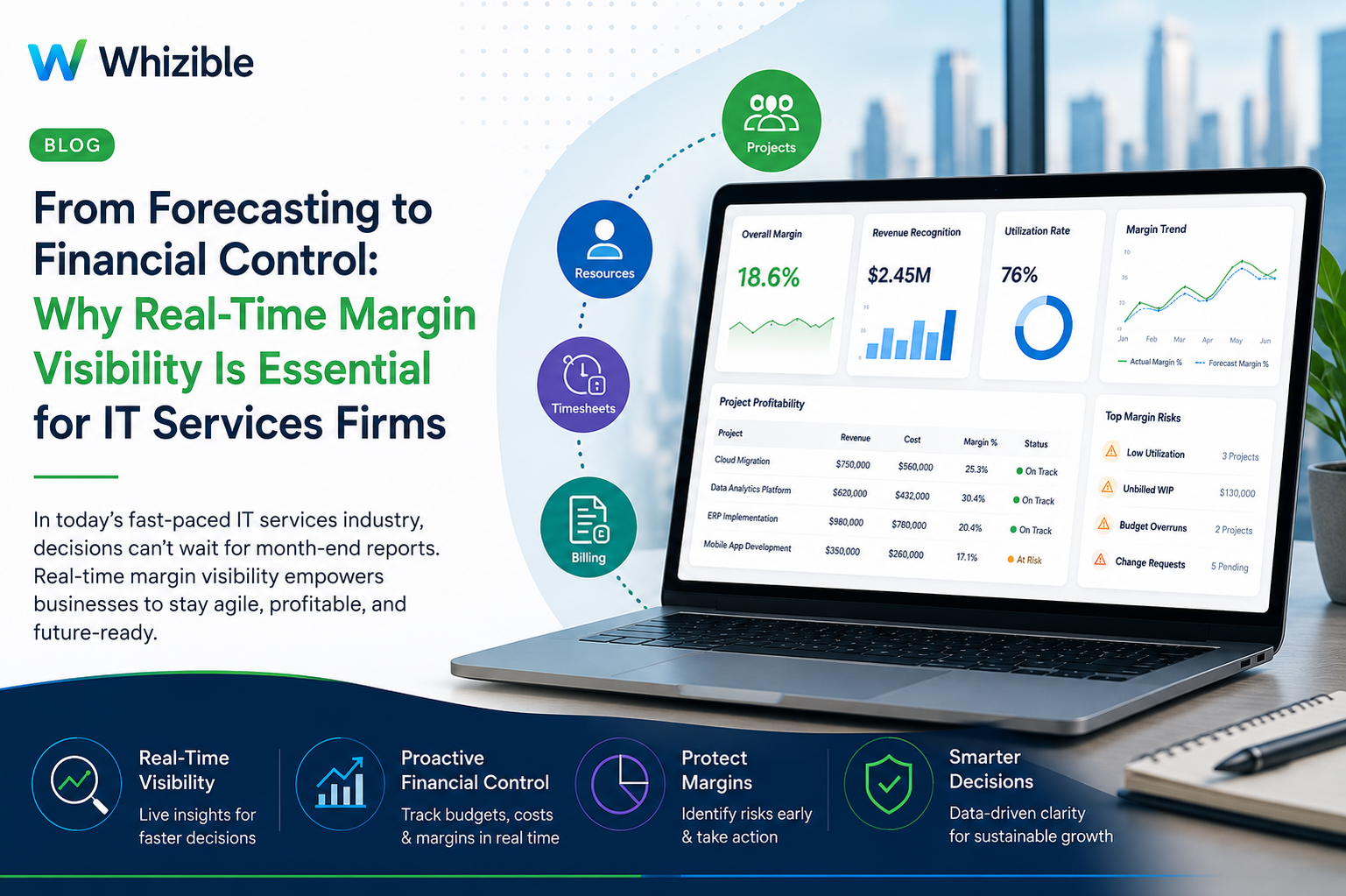
High-performing IT services firms maintain end-to-end visibility across projects, resources, timesheets, billing, and revenue recognition. Rather than relying solely on monthly financial reviews, leadership teams can identify margin risks as they emerge and take corrective action before profitability declines.
One of the biggest obstacles to margin control is fragmented systems. Project managers often use one platform for delivery tracking, resource managers maintain allocation data elsewhere, and finance teams operate within separate accounting or ERP systems. This lack of integration creates operational blind spots where cost overruns, billing delays, and revenue leakage remain hidden.
To overcome this challenge, organizations are moving toward unified operational and financial ecosystems where delivery and finance teams work from a single source of truth. Platforms such as Whizible help organizations connect project execution with financial governance, enabling leadership teams to monitor revenue realization, resource costs, profitability trends, forecasting accuracy, and revenue recognition from one centralized platform.
When project performance, resource allocation, timesheets, and billing data are interconnected, financial management becomes proactive rather than reactive. Delivery managers can identify declining utilization before it impacts margins. Finance leaders can continuously compare forecasted revenue against actual performance. Executives gain greater confidence that project profitability remains aligned with organizational objectives.
Organizations that embrace real-time financial control not only improve profitability but also strengthen forecasting accuracy, customer satisfaction, operational predictability, and long-term business resilience.
Related Resources
- Whizible Resource Management Insights
- Leadership perspectives from Vish Mahajan
FAQs
Why is forecasting alone insufficient for IT services firms?
Forecasting predicts future outcomes, but it does not continuously account for changing project realities. Real-time financial control allows organizations to identify and respond to emerging financial risks immediately.
What causes margin leakage in IT services organizations?
Common causes include low resource utilization, untracked change requests, delayed billing, inaccurate effort tracking, unmanaged project costs, and disconnected operational systems.
How does real-time visibility improve profitability?
Real-time visibility enables early detection of financial risks, helping managers take corrective action before project margins deteriorate.