
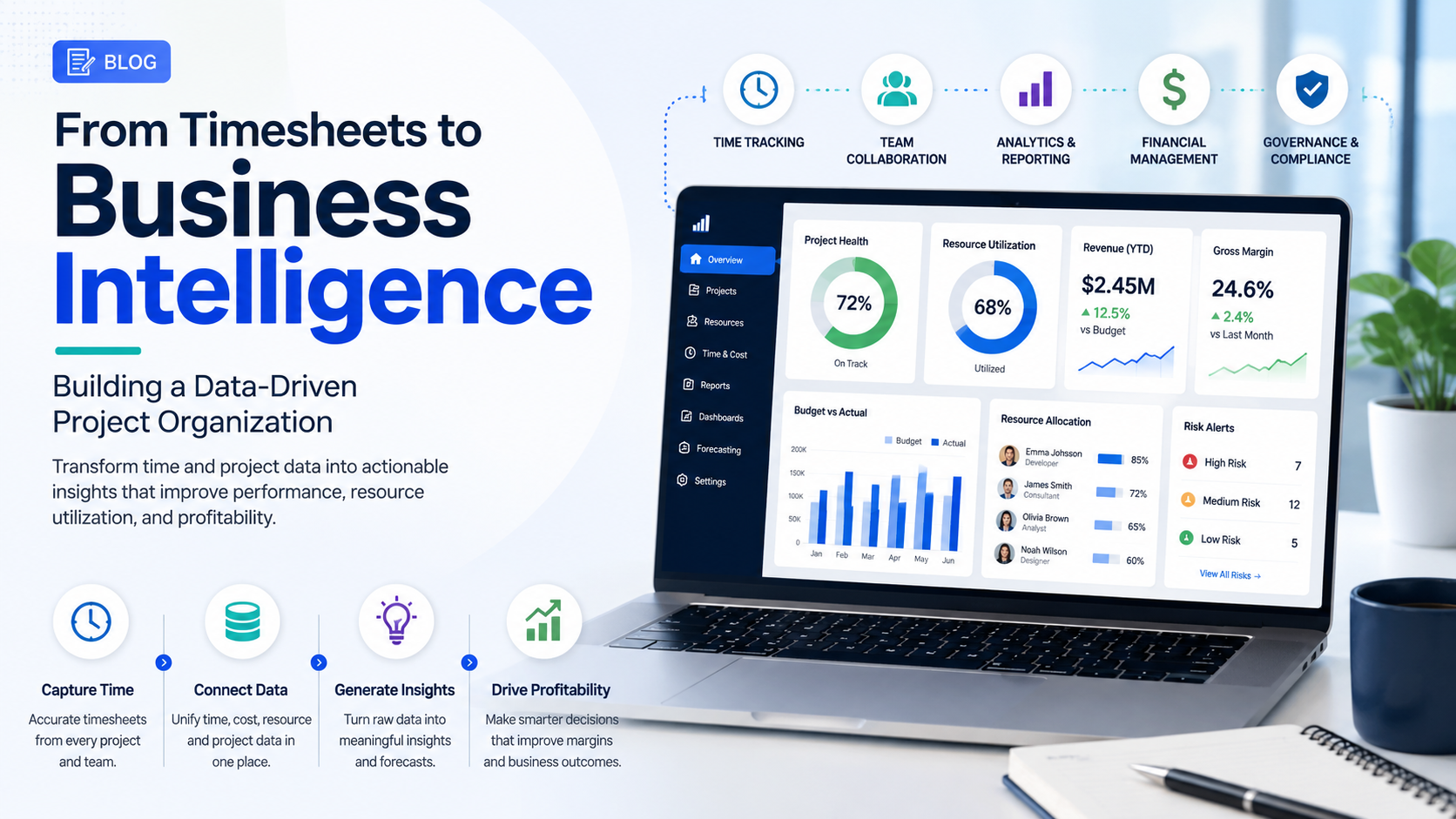
The future of project management is no longer about collecting more data.
It is about making better decisions with the data organizations already possess.
The Problem: Decision-Making Without Visibility
Executives often receive fragmented reports from multiple systems.
Different teams maintain different versions of project reality.
As a result:
- Decisions are delayed.
- Forecasts become unreliable.
- Resource conflicts increase.
- Governance weakens.
Without connected intelligence, leadership reacts instead of leading proactively.
The Solution: Create a Connected Project Intelligence Platform
A modern project organization should integrate:
- Timesheets
- Resource planning
- Financial management
- Delivery tracking
- Risk management
- Portfolio dashboards
- Executive reporting
When every project activity contributes to business intelligence, leaders gain complete visibility into execution, capacity, financial performance, and future outcomes.
Organizations adopting integrated platforms such as Whizible can move beyond reporting to continuous operational intelligence.
Explore more: Whizible Blog Library
Follow more executive perspectives on project governance at Dr. Vishwas Mahajan’s LinkedIn.
Conclusion
Timesheets represent one of the richest sources of business data inside project organizations.
When connected with resources, finance, and delivery information, they become the foundation for better governance, stronger profitability, and smarter executive decisions.
FAQs
Q1. What is business intelligence in project management?
It is the use of connected project, financial, and operational data to support informed business decisions.
Q2. What is the biggest challenge organizations face?
Data exists across multiple systems but is rarely connected into a unified view.
Q3. What outcomes can integrated project intelligence deliver?
Improved governance, better resource utilization, higher profitability, more accurate forecasting, and faster executive decision-making.