
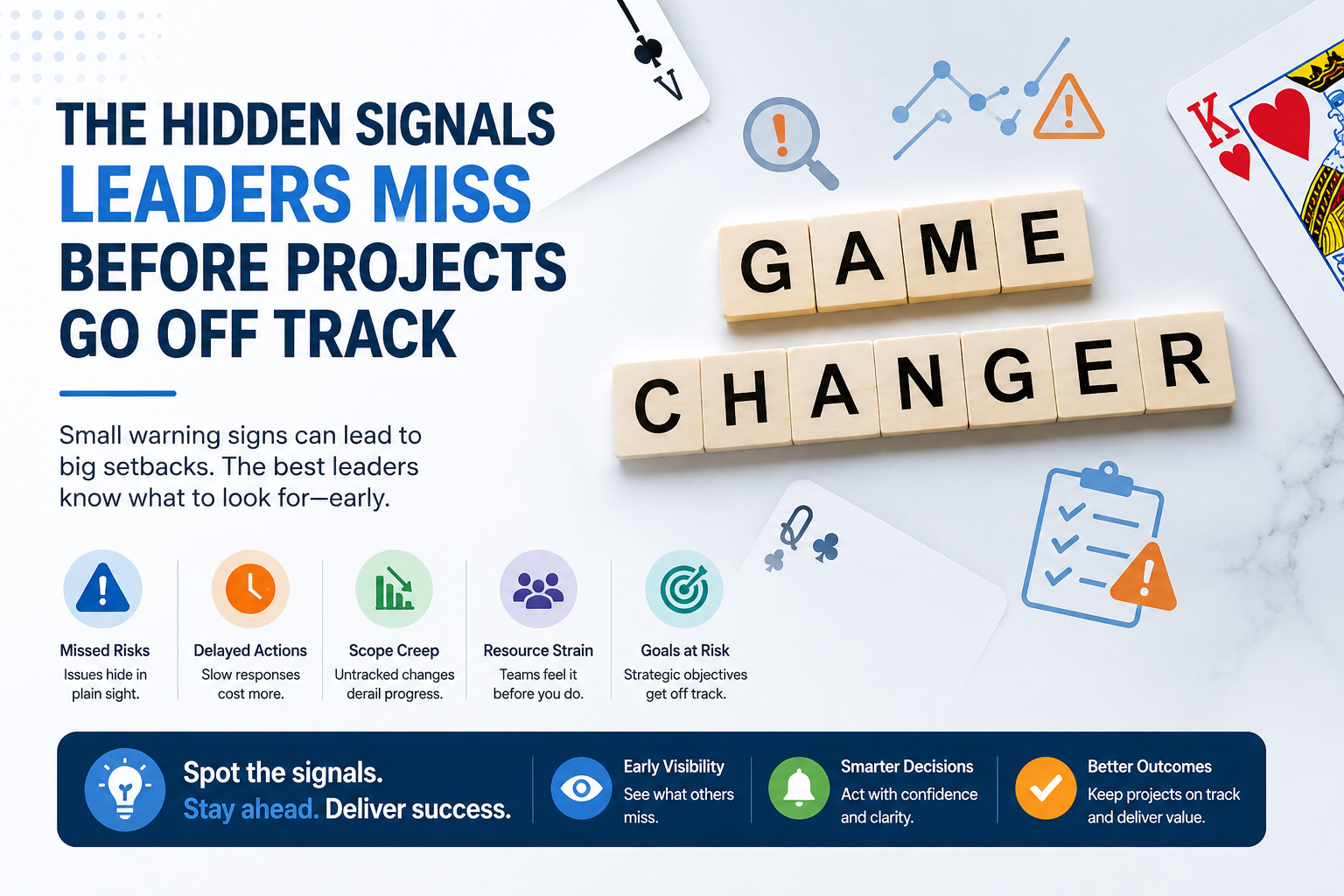
Most project failures don’t begin with a missed deadline or an unhappy customer. They start with small operational signals that seem insignificant on their own but, when ignored, gradually lead to larger business problems.
The challenge is that these signals are often buried across different tools, spreadsheets, emails, and status meetings. By the time they reach leadership, corrective action becomes far more difficult.
The Problem: Risks Don’t Appear Overnight
Project teams usually recognize early signs of trouble long before executives do.
Some of the most common warning signals include:
- Resources consistently working beyond planned capacity
- Delayed timesheet submissions affecting project visibility
- Change requests awaiting approvals for weeks
- Repeated milestone slippages, even by a day or two
- Increasing project effort without corresponding revenue
- Critical dependencies remaining unresolved
Individually, these may seem manageable. Together, they indicate that a project is slowly drifting away from its original plan.
Why Traditional Reporting Misses These Signals
Most executive dashboards focus on completed activities rather than emerging trends.
Weekly reports often answer:
- What happened last week?
- Which milestones were completed?
- How much budget has been spent?
But they rarely answer:
- Which project is most likely to face delays next month?
- Which resource bottleneck could affect multiple projects?
- Where is profitability beginning to decline?
Without continuous visibility, leadership is always reacting instead of anticipating.
The Solution: Identify Risks Before They Escalate
Modern project organizations are moving beyond static reporting and adopting continuous execution intelligence.
By bringing together project progress, resource allocation, financial performance, timesheets, and delivery data into a single operational view, leaders can identify risks while they are still manageable.
Instead of waiting for escalations, executives can proactively:
- Rebalance resources across projects
- Resolve approval bottlenecks faster
- Monitor profitability trends
- Prioritize high-risk initiatives
- Improve forecasting accuracy
Platforms like Whizible help organizations connect these operational signals, enabling leadership teams to make informed decisions based on real-time execution rather than historical reports.
Conclusion
The earliest signs of project failure are often the easiest to fix—but only if they’re visible.
Organizations that monitor operational signals continuously are better equipped to reduce delivery risks, improve customer outcomes, and protect project profitability.
The goal isn’t simply to track projects; it’s to recognize patterns before they become problems.
Related Resources
Continue exploring project execution and governance:
- Whizible Blog: https://www.whizible.com/blog/
- Leadership Insights by Dr. Vishwas Mahajan: https://www.linkedin.com/in/vishmahajan/
FAQs
-
What are early warning signs in project management?
They include resource overallocation, delayed approvals, milestone slippages, budget deviations, and declining project profitability.
-
Why are these signals often missed?
Because they are spread across disconnected systems and are not visible in a unified dashboard.
-
How can organizations detect project risks earlier?
By integrating project, resource, financial, and operational data to create real-time visibility.
-
How does Whizible help?
Whizible connects project execution, resource planning, timesheets, and financial insights into one platform, helping leaders identify risks before they impact delivery.