
The first three articles in this series reveal a consistent pattern.
High utilization can hide weak margins. Resource cost and unplanned effort can quietly erode profitability. And utilization becomes far more meaningful when viewed alongside realization, effort variance and project margin.
So what should organizations do differently?
They need to redesign resource management around economic outcomes rather than capacity consumption.
The objective is no longer:
“How do we keep everyone utilized?”
It becomes:
“How do we deploy our available talent in a way that maximizes delivery value and sustainable project profitability?”
What Profitability-Driven Resource Planning Looks Like
First, organizations need forward-looking capacity visibility. Managers should know who is available today, who will roll off soon and what skills will become available against upcoming demand.
Second, allocation should consider skills and cost together. The most qualified resource is not automatically the most economically appropriate resource.
Third, resource decisions should connect directly with project financials. When actual effort increases or resource mix changes, managers should understand the likely margin impact.
Finally, leaders need early-warning indicators rather than retrospective explanations.
The Solution: One Connected Resource-to-Profitability Model
A modern PSA environment can bring together:
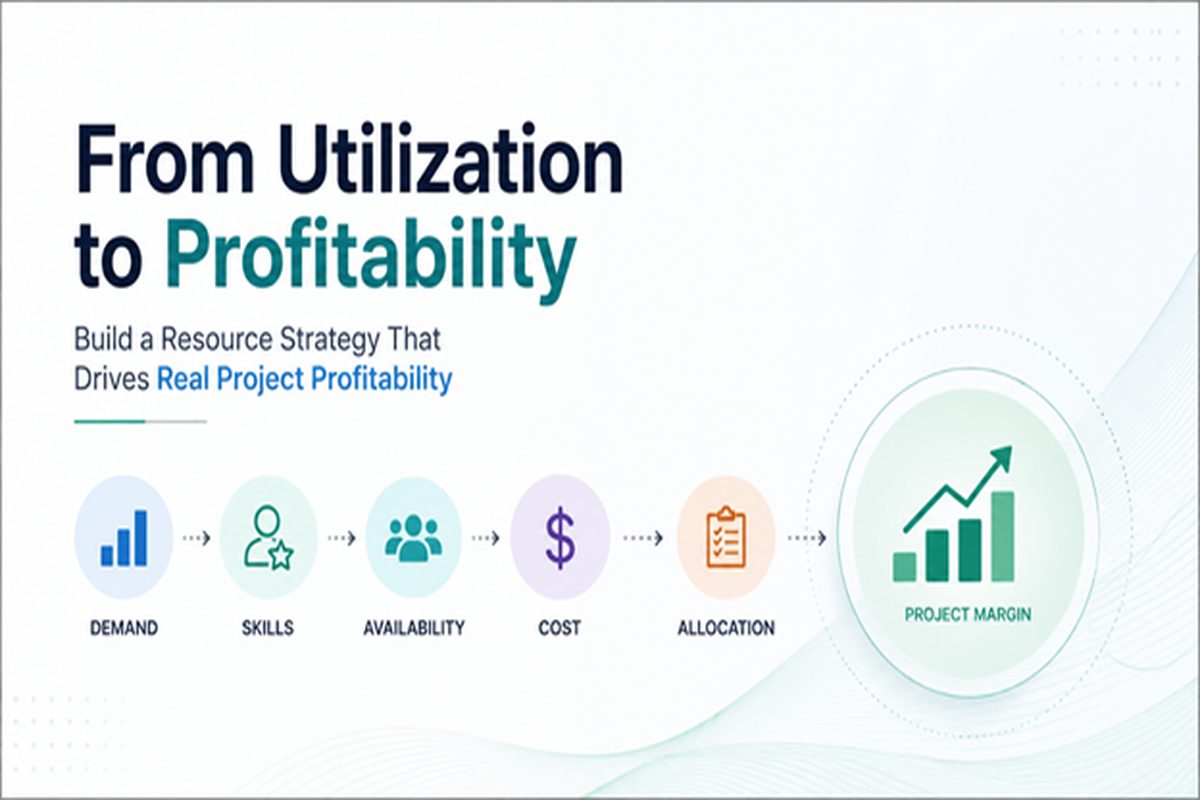
Resource demand + availability + skills + allocation + timesheets + cost + revenue + profitability.
This provides a much stronger decision framework than an isolated utilization report.
Whizible’s existing resource-management guidance advocates centralized visibility, skill-based matching and real-time utilization information rather than fragmented spreadsheet-based planning.
The platform’s broader positioning also combines project management, resource optimization, financial controls, cost tracking and profitability analysis within an integrated operational environment.
The result is an important organizational shift:
Resource utilization becomes an input to profitability not the definition of performance.
The Bigger Leadership Question
For CFOs, PMOs and delivery leaders, the goal shouldn’t be achieving the highest utilization percentage possible.
The goal should be building a system where every resource decision can be connected to delivery outcomes and financial impact.
That means asking better questions:
- Are we using the right skill mix?
- Are our most expensive resources working where they create the greatest value?
- Which projects are consuming more effort than planned?
- Where will capacity become available next month?
- Which projects are likely to experience margin pressure?
When these questions can be answered early, resource management stops being an administrative scheduling exercise.
It becomes a profitability lever.
FAQs
1. What is profitability-driven resource management?
It is an approach that evaluates resource decisions using skills, availability, cost, billability, project requirements and expected financial outcomes rather than utilization alone.
2. Should companies stop measuring utilization?
No. Utilization remains valuable, but it should be interpreted alongside financial and delivery KPIs.
3. How does real-time visibility improve profitability?
It helps managers identify changes in effort, capacity, staffing and project economics earlier, providing more time for corrective decisions.
4. What role does PSA software play?
PSA software can connect project execution, resource management, time capture and financial information so operational decisions can be evaluated against business outcomes.
Conclusion: Don’t Optimize for Busy. Optimize for Profitable.
High utilization may look impressive on a dashboard.
But profitability is created when the right resource, with the right skills and cost, works on the right project at the right time and that effort converts into commercial value.
That is why modern resource management must move beyond maximizing utilization.
The next competitive advantage is profitability intelligence.
Ready to connect resource planning with project profitability?
Explore Whizible to see how integrated resource, project and financial visibility can help your organization make more profitable delivery decisions.
You can also follow Vishwas Mahajan on LinkedIn for perspectives on project governance, resource intelligence and profitable growth.