
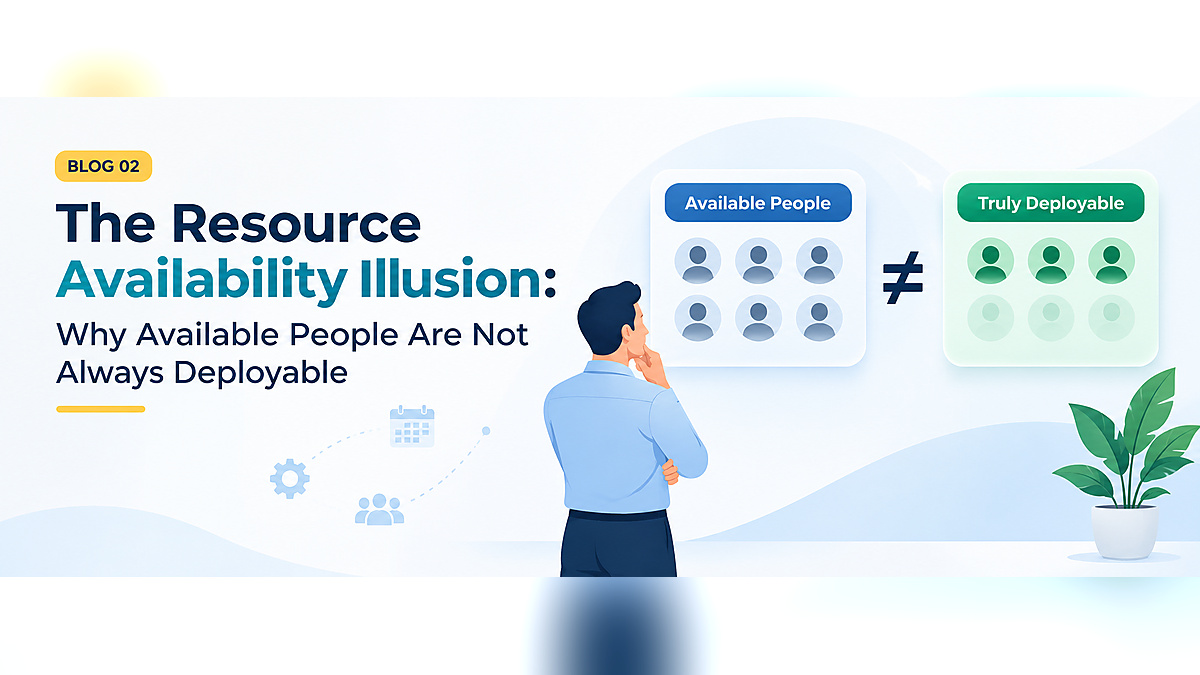
A delivery manager receives a new project requirement. The resource management report indicates that several employees are available, so the organization assumes the project can begin immediately.
But when allocation discussions start, the reality is different.
Some employees lack the required technical expertise. Others are partially allocated to existing projects. A few are available only after critical customer milestones.
The organization has available people, but not necessarily deployable capacity.
This distinction is one of the most important yet frequently overlooked aspects of enterprise resource management.
The Problem: Headcount Creates a False Sense of Capacity
Traditional resource planning often measures availability through employee counts, utilization percentages, or allocation spreadsheets.
However, delivery readiness depends on more than whether someone has unallocated hours.
A project may require a cloud architect with industry-specific experience, but the available workforce may consist primarily of developers with different skills. Similarly, a consultant showing 40% availability may have fragmented time across multiple projects, making that capacity unsuitable for a critical assignment.
When organizations rely on headline availability numbers, they risk making commitments based on capacity that cannot realistically be deployed.
This leads to resource reshuffling, unnecessary hiring, delayed project initiation, and increased pressure on high-performing employees.
The Solution: Move From Availability Tracking to Capability-Based Planning
Effective resource planning must answer three questions together: Who is available? What can they deliver? And when can they contribute?
Organizations need a connected view of employee skills, current assignments, future allocations, project requirements, and availability windows.
How Whizible Helps Improve Resource Visibility
Whizible’s resource management capabilities help organizations evaluate allocation and availability in the context of project requirements.
By connecting resource information with project schedules and delivery planning, managers can identify potential shortages, assess future demand, and make more informed allocation decisions.
This approach can also help reduce the tendency to overload a small group of specialists while other employees remain underutilized.
Explore Whizible’s enterprise resource management platform to understand how connected planning supports better allocation decisions.
Conclusion: Capacity Is About Capability, Not Just Numbers
Having 100 available employees does not mean an organization can immediately deliver 100 employees’ worth of project demand.
Real capacity depends on the alignment of skills, timing, availability, and project priorities.
Organizations that understand this distinction can improve delivery predictability without relying exclusively on additional hiring.
Explore smarter resource planning: www.whizible.com
Read more leadership insights from Dr. Vishwas Mahajan.
Frequently Asked Questions
Q1. What is the difference between resource availability and resource capacity?
Availability indicates unallocated time, while usable delivery capacity also considers skills, schedules, dependencies, and project requirements.
Q2. Why are utilization reports insufficient for resource planning?
Utilization reports show how time is allocated or spent but may not reveal future skill shortages or deployment constraints.
Q3. How does skills-based resource planning help?
It helps organizations match project requirements with suitable employees, reducing mismatches and improving delivery readiness.
Previous blog: The Commitment-to-Capacity Gap (proposed series URL).
Next in the series: When Sales Promises Become Delivery Risks: The Hidden Cost of Overcommitment.