
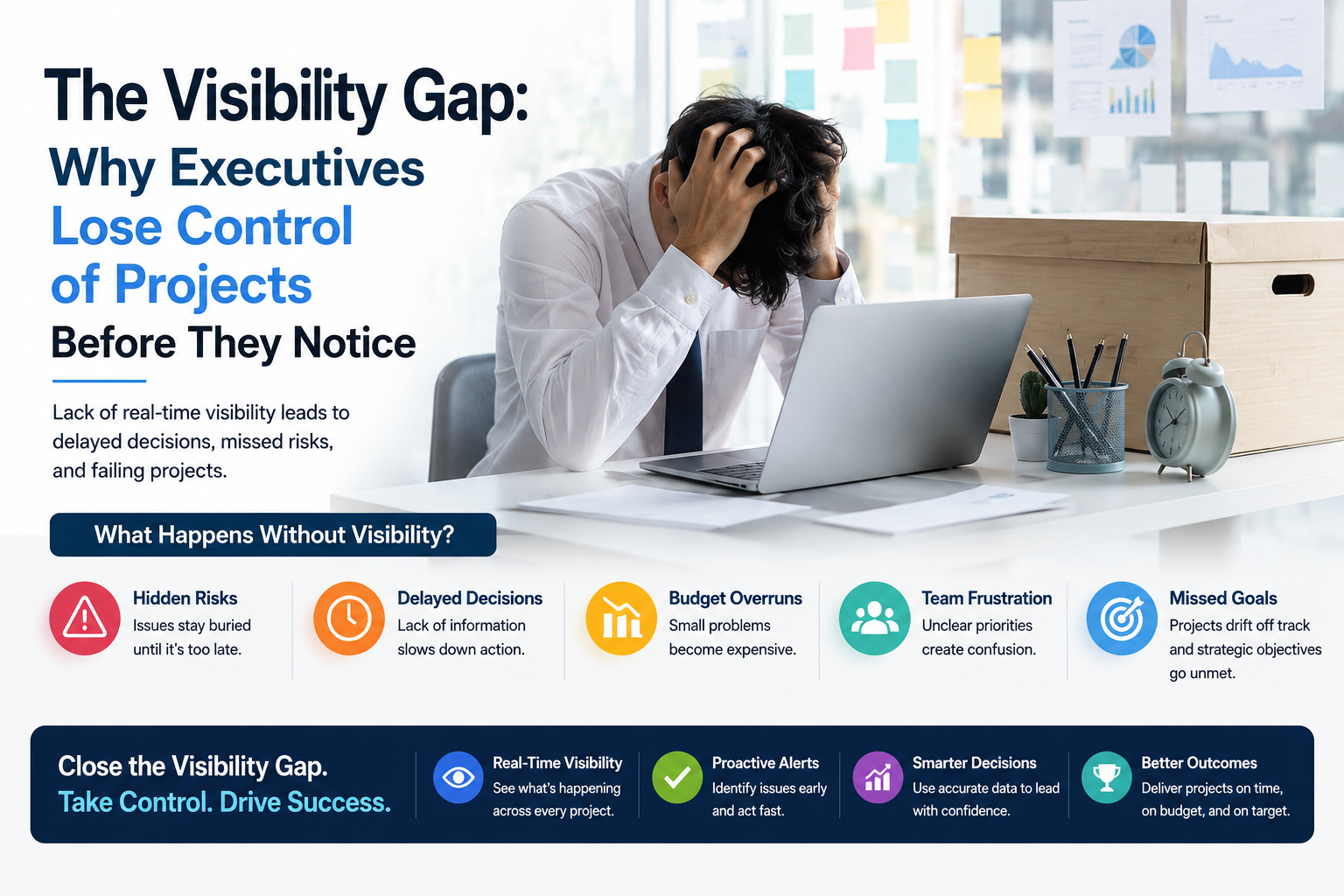
Projects rarely fail overnight. They drift off course gradually through missed deadlines, delayed approvals, resource conflicts, and financial deviations. Yet, many executives only become aware of these issues when they have already impacted delivery, profitability, or customer satisfaction.
The problem isn’t a lack of reports, it’s a lack of real-time visibility.
Most organizations have project management tools, financial systems, resource planners, and executive dashboards. But these systems often operate independently, creating fragmented information that delays decision-making. As a result, leaders make strategic decisions based on yesterday’s data instead of today’s reality.
The Problem: Reporting Doesn’t Equal Visibility
Weekly status meetings and monthly dashboards provide useful summaries, but they don’t always reveal what’s happening on the ground.
A project may still be marked “Green” while:
- Critical resources are overallocated.
- Change requests are waiting for approval.
- Profit margins are shrinking.
- Milestones are beginning to slip.
These are early warning signals that often remain hidden across different systems until they become major business problems.
Suggested Image Placement

The Solution: Connect Execution with Leadership
Closing the visibility gap requires more than another reporting tool. It requires connecting operational data across projects, people, financials, and delivery into one continuous view.
When leaders can monitor live execution, they can answer questions like:
- Which projects are becoming risky?
- Where is resource capacity becoming a constraint?
- Which customers require immediate attention?
- How will current delivery impact future revenue?
Instead of reacting after problems occur, executives can intervene while corrective action is still possible.
Platforms like Whizible help organizations bring together project execution, resource management, timesheets, financial performance, and executive dashboards into a unified operational view. This enables leadership teams to make faster, more informed decisions based on current execution rather than historical reports.
Conclusion
Visibility is no longer about having more reports, it’s about having the right information at the right time.
Organizations that connect execution data across teams gain earlier insights, reduce operational surprises, and improve project outcomes. For executives, real-time visibility becomes the foundation for confident decision-making rather than reactive management.
Related Resources
Explore more insights on project governance, resource management, and project profitability on the Whizible blog:
- https://www.whizible.com/blog/
- Learn more from Dr. Vishwas Mahajan: https://www.linkedin.com/in/vishmahajan/
FAQs
-
What is the visibility gap in project management?
It is the disconnect between actual project execution and what leadership can see through traditional reporting.
-
Why do executives lose control of projects?
Because critical execution signals are often spread across disconnected systems and become visible only after issues escalate.
-
How can organizations improve project visibility?
By integrating project, resource, financial, and operational data into a unified, real-time view.
-
Why is real-time visibility important?
It enables proactive decision-making, helping leaders address risks before they impact delivery or profitability.
Is your leadership team relying on historical reports to understand project health?
Discover how Whizible helps organizations gain real-time visibility across projects, resources, and financial performance empowering executives to make better decisions before challenges become business problems.