
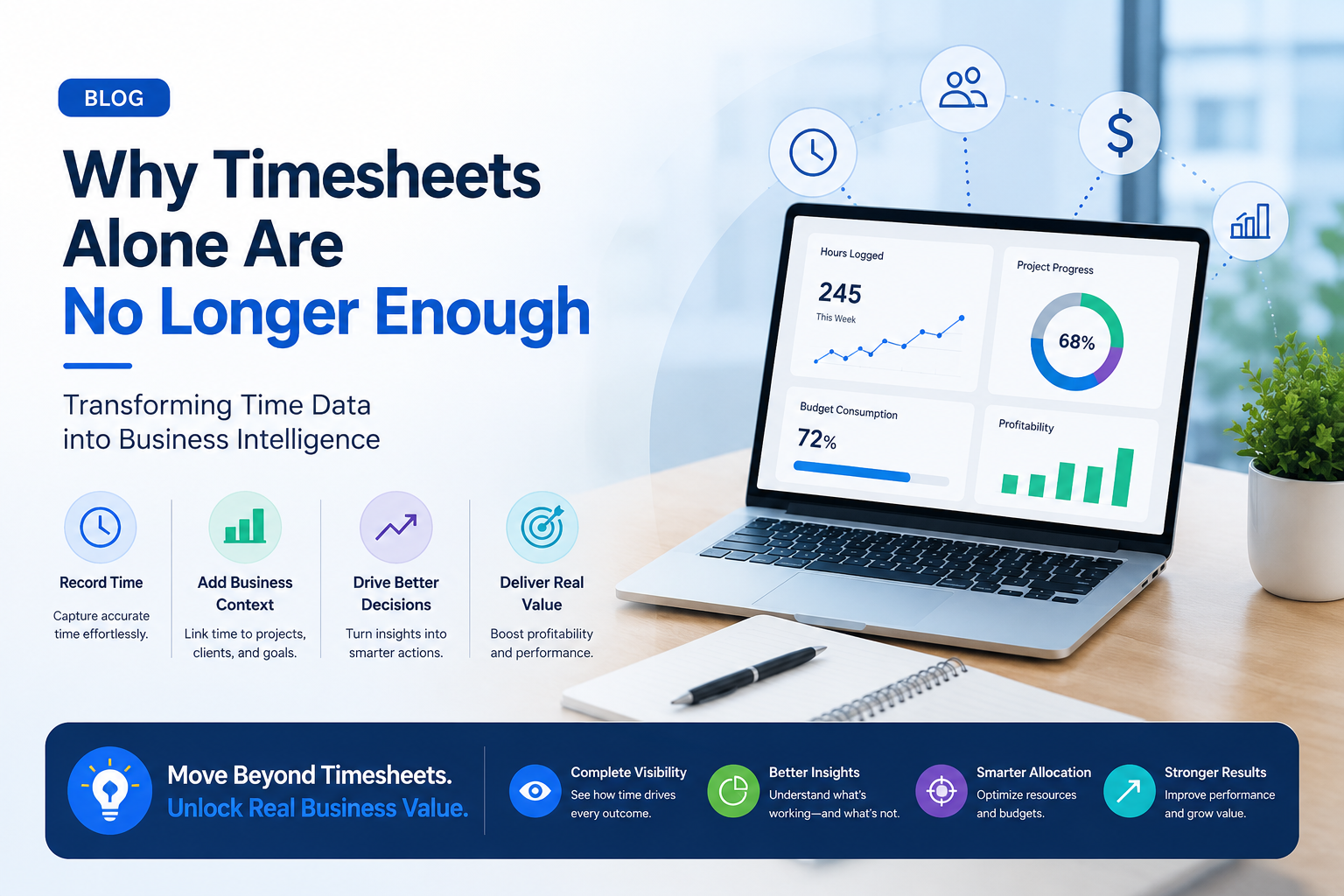
Organizations invest significant effort in collecting timesheet data. Employees submit hours, managers approve them, finance teams use them for billing, and leadership expects meaningful insights.
Unfortunately, most organizations stop at recording time.
The result is an organization that knows how many hours were worked but has little understanding of whether those hours created value.
The Problem: Timesheets Have Become Administrative Instead of Strategic.
Many organizations still treat timesheets as a compliance exercise.
They answer questions like:
- Who submitted their timesheet?
- How many hours were logged?
- Which project consumed the most effort?
But leadership needs answers to much bigger questions.
- Which projects are becoming unprofitable?
- Where are delivery teams overloaded?
- Which customers consume excessive effort?
- Are resource allocations aligned with business priorities?
Standalone timesheets simply cannot answer these questions because they exist in isolation from delivery, finance, resource planning, and project execution.
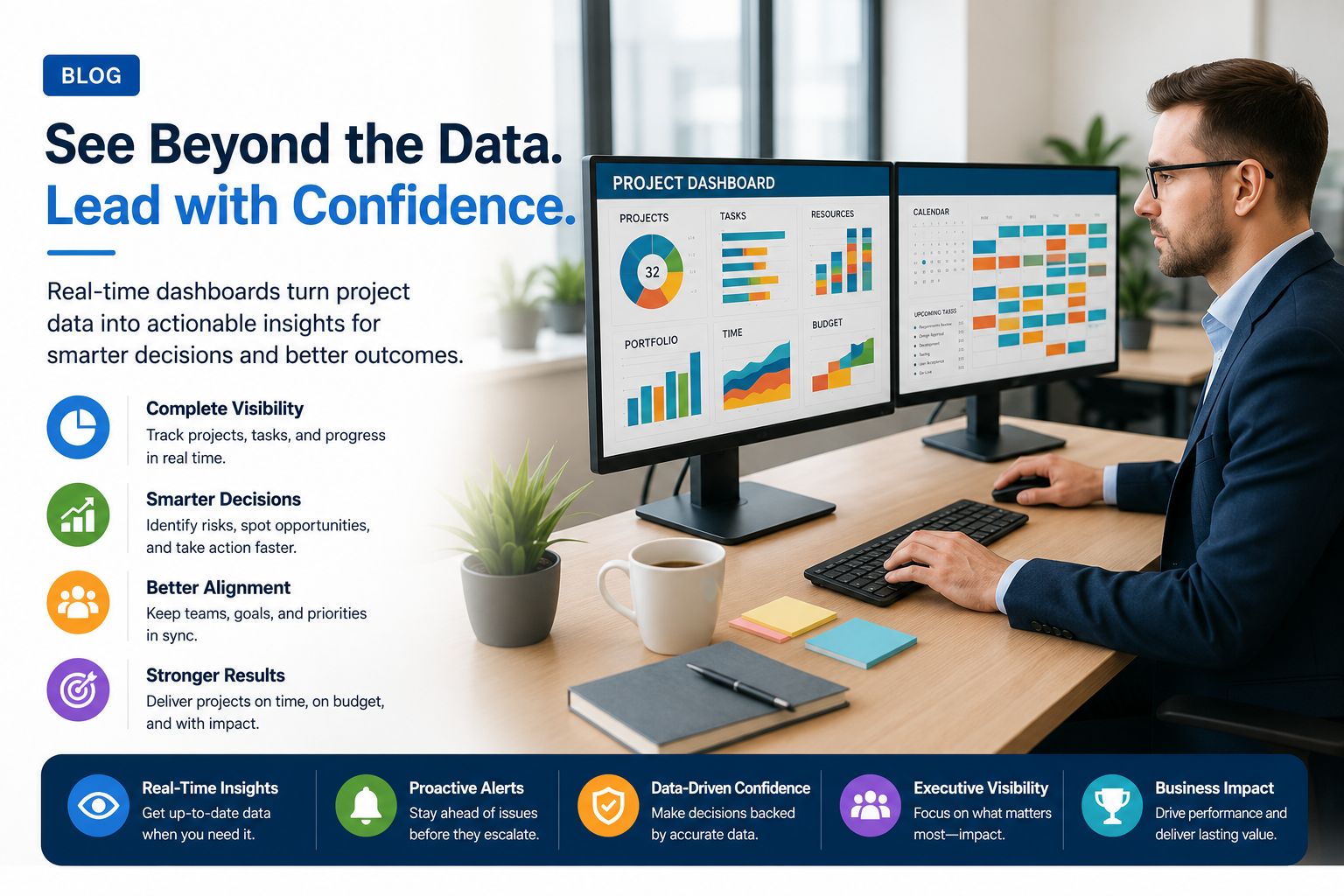
The Solution: Connect Time with Business Context.
The real value of timesheets appears when they become part of an integrated project intelligence platform.
Instead of only recording hours, organizations can connect them with:
- Resource allocation
- Project progress
- Budget consumption
- Revenue recognition
- Profitability
- Executive dashboards
This transforms timesheets from administrative records into strategic business data.
Platforms like Whizible help organizations connect project execution with financial outcomes, enabling leaders to make decisions based on real-time visibility instead of retrospective reports.
Related Reading: Whizible Blogs
For more leadership perspectives on project governance and delivery excellence, explore Dr. Vishwas Mahajan’s LinkedIn.
Conclusion
Timesheets should not be the destination they should be the starting point for better business intelligence.
Organizations that transform project data into actionable insights gain stronger governance, better utilization, and more predictable business outcomes.
FAQs
Q1. Are timesheets still necessary?
Yes. They remain essential, but their value increases dramatically when integrated with project, financial, and resource data.
Q2. Why do executives need more than utilization reports?
Because utilization alone cannot explain profitability, project health, or delivery risks.
Q3. What business decisions improve with connected project data?
Resource planning, project prioritization, financial forecasting, and profitability management.